What the result actually says
A stool test result says something was detected above a threshold: blood, or DNA markers associated with bowel tumours, or both. It does not say where it came from or what is causing it. That is the whole job of the investigation that follows.
Among people who screen positive on stool testing, the substantial majority turn out not to have cancer. Polyps, haemorrhoids, diverticular disease, inflammation and incidental bleeding all produce abnormal results. Some of those findings still matter — a polyp removed is a cancer that never happens — but they are not the thing people fear when they read the word abnormal.
What happens next with us
A GP reviews the result and contacts you to talk it through, at no extra cost. You will get a clear explanation of what was measured, what the number means and what the sensible next step is. Where that step is colonoscopy, you will be given written information you can take to your own GP or use to arrange it privately.
Tell your own GP. A private result sitting in your email does nothing; in your GP record it becomes part of your care.
What colonoscopy involves
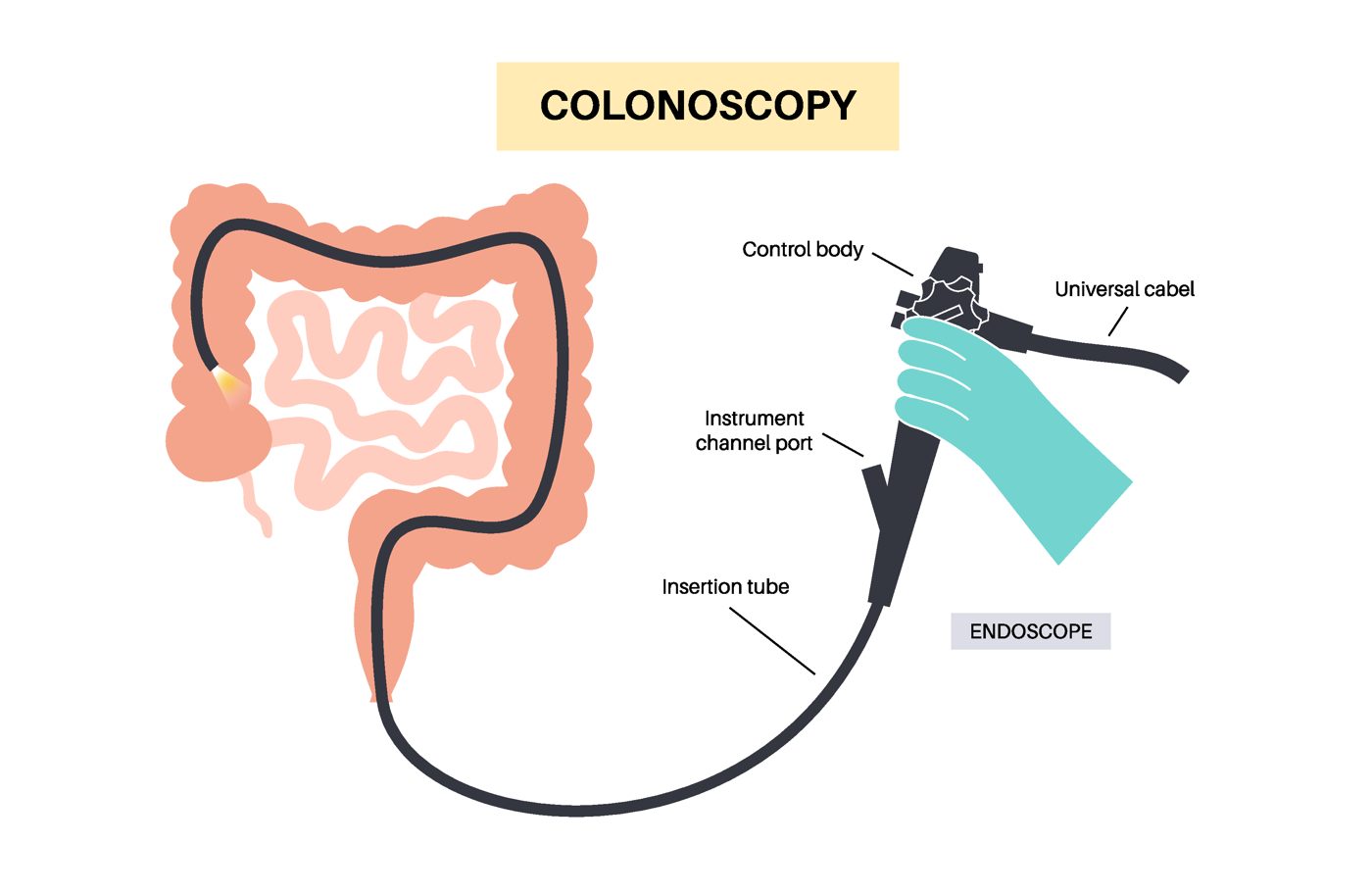
A flexible camera examines the lining of the large bowel. You take a bowel preparation the day before, which empties the bowel and is the part most people find least pleasant. Sedation is usually offered. The procedure itself takes around 30 to 45 minutes.
If a polyp is found it can usually be removed there and then and sent for analysis. That is the single biggest advantage over any stool test: it is diagnostic and therapeutic in one sitting. Serious complications are uncommon but not zero, and the team will go through them with you.
While you wait
Waiting is the hard part. Two things worth holding onto: the odds still favour a non-cancer explanation, and if it is something, you are now on the path that finds it early. That is the outcome screening exists to produce.
If you develop new symptoms while waiting — heavy bleeding, severe pain, persistent vomiting — do not wait for the appointment. Contact your GP or call 111, or 999 if it is severe.
And if it comes back clear
A colonoscopy that finds nothing after an abnormal stool test is a good outcome, not a wasted one. It means the bleeding or the shed DNA had a benign explanation, and you now have direct evidence about your bowel that no stool test could have given you.
Keep screening at the recommended interval afterwards, and keep acting on symptoms. One clear result describes one moment in time.