MeCheck  /  ColoAlert

A bowel tumour does not always bleed.

That is the problem with testing for blood alone. ColoAlert is a home bowel cancer screening test that looks for hidden blood and for tumour-associated DNA in the same stool sample, so a tumour that is not bleeding on the day you test still has a way of showing up.

Order — £324.99 Check if it suits you
What ColoAlert measuresOne stool sample
HaemoglobinHidden blood in the stoolELISA
HaptoglobinBlood from higher in the bowelELISA
KRASTumour-associated gene mutationqPCR
BRAFTumour-associated gene mutationqPCR
hDNAHuman DNA shed by bowel cellsqPCR
Analysed at biovis Diagnostik MVZ GmbH, Limburg-Eschhofen, Germany — accredited to DIN EN ISO 15189.
£324.99 all inFree UK delivery and prepaid return
ISO 15189 laboratoryAnalysed at biovis, Germany
Reviewed by a named GPDr Chun How Tang, GMC 4576963
Result in about 10 daysPlain, unbranded packaging
Over 8,000 markers runFive markers from every sample

If you have symptoms, see your GP instead

Screening tests are designed for people who feel well. They are not the right tool for investigating a symptom, and using one can delay a diagnosis that needs urgent attention. Contact your GP without delay if you have:

  • Blood in your stool, or bleeding from the back passage
  • A change in your bowel habit lasting three weeks or more
  • Weight loss you cannot explain
  • Abdominal pain, discomfort or bloating that keeps coming back
  • Tiredness that is new and unexplained

Your GP can refer you urgently on the NHS. That route is faster and more thorough than any home test.

polyp cells and DNA leave in the stool whether or not the polyp is bleeding

Why five markers rather than one

The NHS bowel screening programme uses a faecal immunochemical test, or FIT. It is a good test and it is free, but it does one thing: it detects human haemoglobin, meaning blood, in your stool. Bowel tumours and large polyps often bleed, so that works much of the time.

The difficulty is that bleeding is intermittent. A tumour may bleed one week and not the next. It may sit high in the bowel, where haemoglobin is partly broken down before it reaches the stool. A single FIT sample catches the day it is taken, and no more than that.

ColoAlert adds three things to that picture. Haptoglobin survives further along the bowel than haemoglobin, so blood originating higher up is less likely to be missed. KRAS and BRAF are genes that are frequently mutated in colorectal tumours, and cells shed from a tumour carry those mutations into the stool whether or not the tumour is bleeding. hDNA measures the overall quantity of human DNA in the sample, which tends to rise when bowel cells are being shed abnormally fast.

Together they give five independent signals from one sample instead of one.

Illustration of a tumour cell shedding DNA, the basis of the KRAS, BRAF and hDNA markers
Cells shed from a tumour carry KRAS and BRAF mutations into the stool, whether or not the tumour is bleeding.

What the test is, in plain terms

You collect a stool sample at home using the tubes provided. One tube contains a DNA stabiliser, which preserves any genetic material until the sample reaches the laboratory. You post it back in the prepaid packaging, and it travels to biovis Diagnostik MVZ GmbH in Limburg-Eschhofen, Germany.

There the haemoglobin and haptoglobin are measured by ELISA, and the KRAS, BRAF and hDNA markers by quantitative PCR. biovis is accredited to DIN EN ISO 15189, the international quality standard for medical laboratories, and the test set is manufactured by biovis as an in-house medical device.

Woman in her fifties at home
Screening is for people who feel well — most often from the mid-forties onwards.
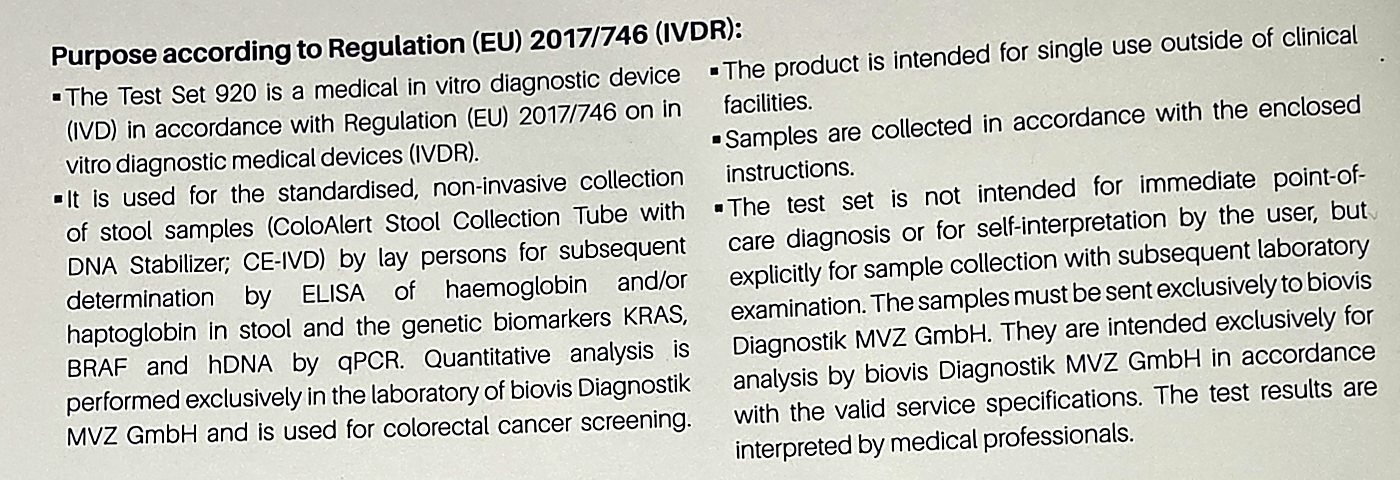
The manufacturer's stated intended purpose under EU IVD Regulation 2017/746
The manufacturer’s stated purpose, from the instructions supplied with every kit.
Laboratory scientist examining a sample plate
Every sample is analysed at biovis Diagnostik MVZ GmbH, accredited to DIN EN ISO 15189.

Who it is for

Adults aged 45 and over who have no bowel symptoms. That age matters: bowel cancer rates begin climbing from the mid-forties, while the NHS programme starts inviting people at 50 in most of the UK, leaving a window where screening is worth doing but not yet offered.

It is also worth considering if you have a family history of bowel cancer, if you want to screen between NHS invitations, or if you would simply rather not wait. It is not a replacement for the NHS programme, and you should still take part when you are invited.

Who it is not for

Anyone with symptoms. If you have bleeding, a persistent change in bowel habit, unexplained weight loss, ongoing abdominal pain or new unexplained tiredness, a screening test is the wrong tool and it may cost you time. See your GP, who can refer you urgently.

It is also unsuitable during menstruation, with actively bleeding haemorrhoids, with bleeding gums or gastritis, or during an episode of diarrhoea. Each of these can affect the result.
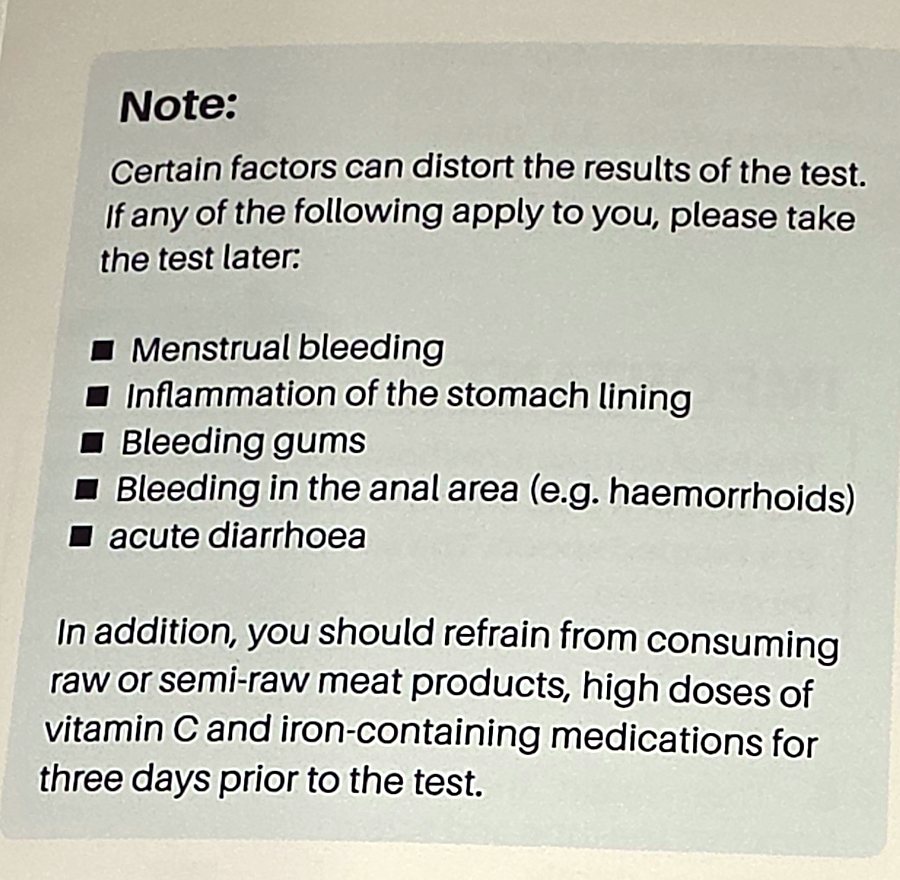
Manufacturer’s note listing factors that can distort the result: menstrual bleeding, gastritis, bleeding gums, haemorrhoids and acute diarrhoea
From the manufacturer’s instructions: when to postpone the test.

ColoAlert compared with FIT alone

A day the tumour bleeds blood in stooldetected by FIT DNA markersalso detected A day it does not bleed no bloodFIT finds nothing DNA still shedmarkers detect it

Testing for blood captures a tumour only on a day it happens to bleed. DNA markers are shed either way, which is why combining the two gives a second route to detection.

NHS FITColoAlert
What it detectsHaemoglobinHaemoglobin, haptoglobin, KRAS, BRAF, hDNA
Detects a non-bleeding tumourUnlikelyPossible, via DNA markers
Age offeredFrom 50 in most of the UKFrom 45, by choice
FrequencyEvery two yearsEvery three years
CostFree£324.99
Who reads itNHS screening programmeA named GP, GMC 4576963

ColoAlert is intended alongside the NHS programme, not instead of it. If you are invited for NHS screening, take part.

Five markers from one sample, £324.99. Free UK delivery and return. Abnormal results reviewed by a GP at no extra cost.
Order ColoAlert
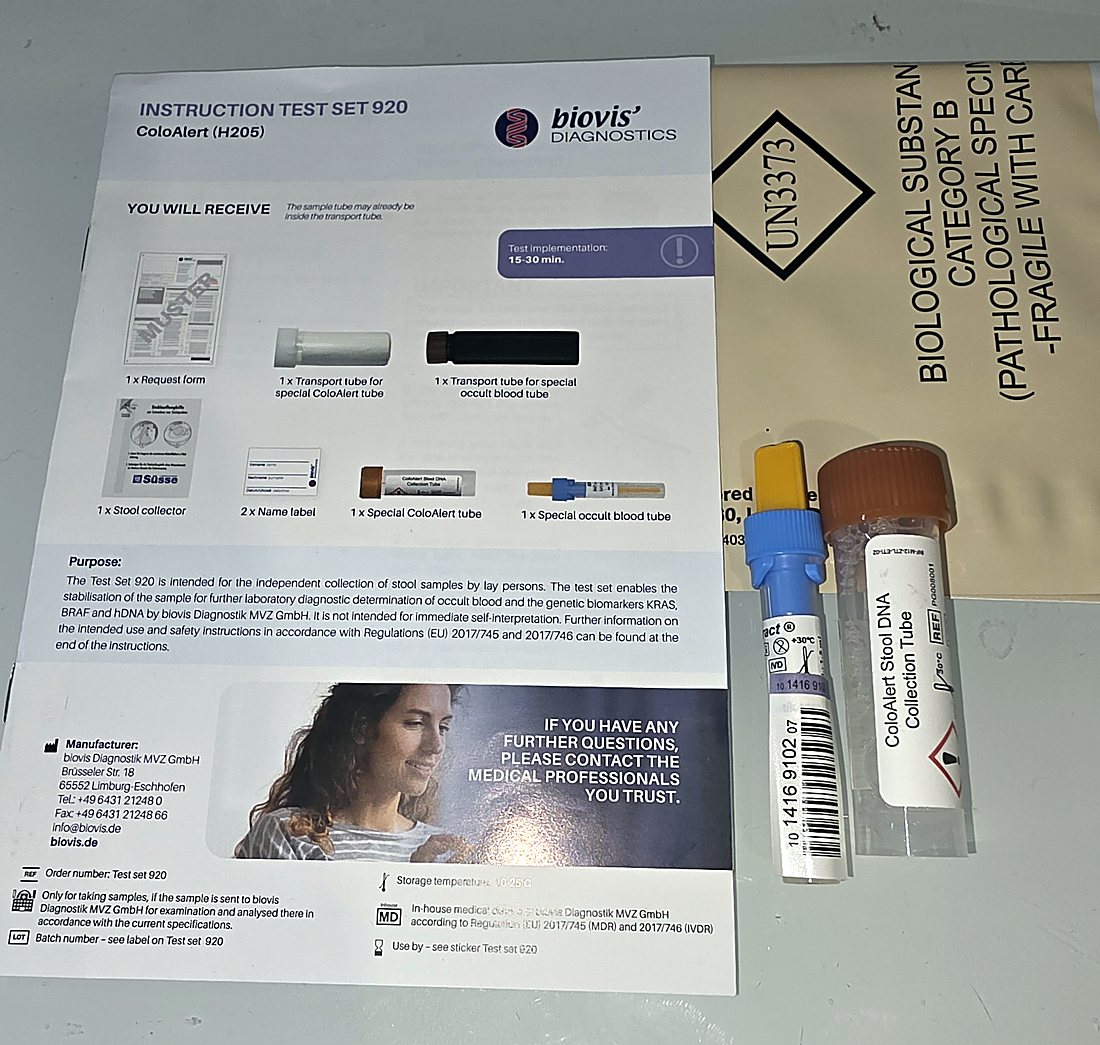
The ColoAlert test set as supplied, with instruction leaflet, collection tubes and return packaging
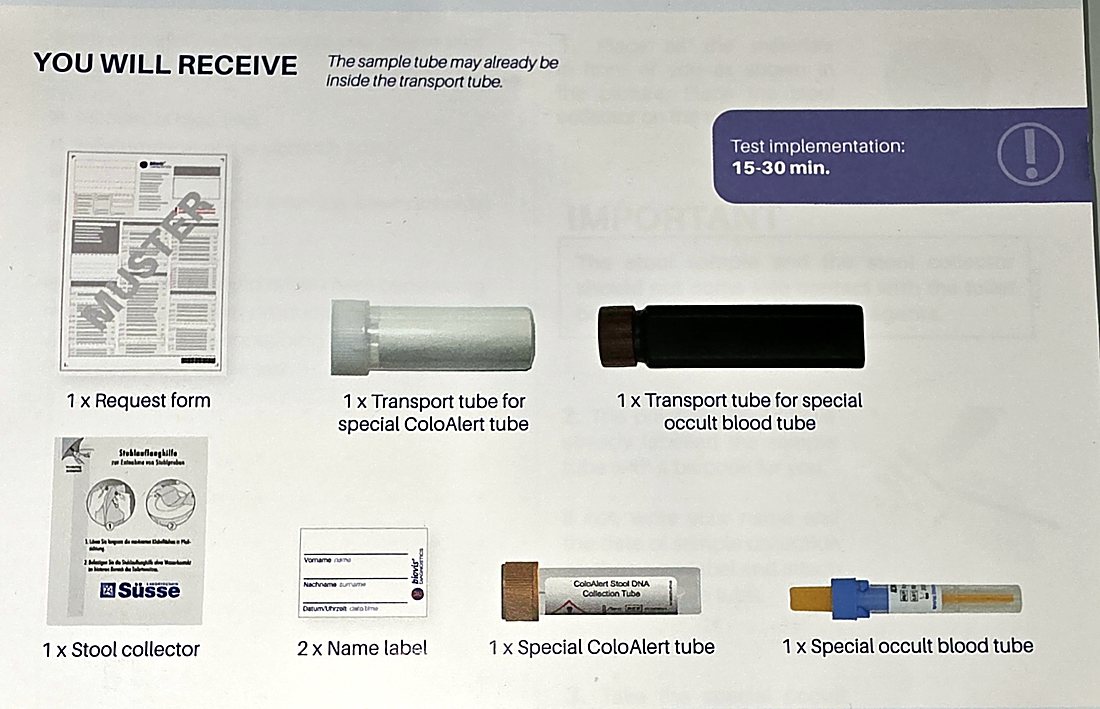
The kit as supplied
Contents of the ColoAlert test set: request form, transport tubes, stool collector, name labels, ColoAlert tube and occult blood tube
What is in the box
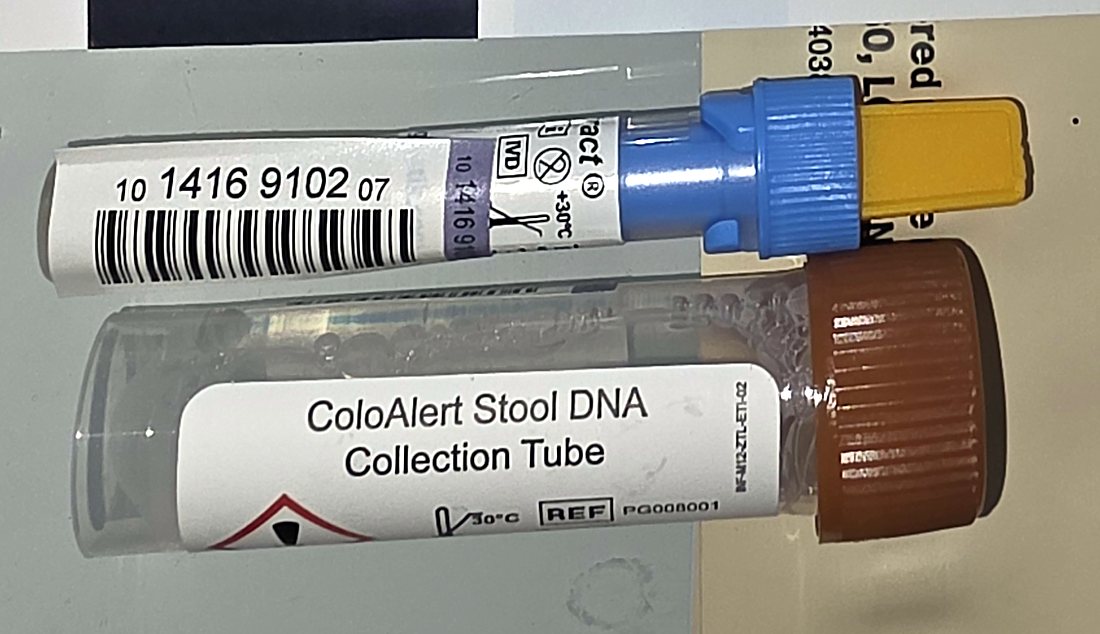
ColoAlert Stool DNA Collection Tube and the occult blood collection tube
The two collection tubes

Order ColoAlert

Bowel cancer screening

ColoAlert

A stool test that looks for hidden blood and for tumour-associated DNA in the same sample. The DNA markers matter because a bowel tumour does not always bleed, and a test that looks only for blood can miss it. Recommended every three years from age 45 for people without symptoms.

Sample
Stool, collected at home
Markers
5
Laboratory
biovis, Germany
Results
About 10 days
£324.99Free UK delivery and return
Order ColoAlert
What £324.99 includes
  • The test set, delivered free anywhere in the UK
  • Prepaid UN3373 return packaging
  • Laboratory analysis of all five markers at biovis
  • A written report you can keep or give to your GP
  • GP review and a call about any abnormal result, at no extra cost
Before you order, check that you:
  • Are 45 or over
  • Have none of the symptoms listed above
  • Are not menstruating or bleeding from haemorrhoids
  • Can avoid raw meat, high-dose vitamin C and iron supplements for three days
  • Can post your sample Monday to Thursday

Not sure? Take the two-minute suitability check →

A patient speaking to a GP by video call
Anything abnormal is reviewed by a GP, who contacts you to talk it through at no extra cost.

Questions about ColoAlert

How much does ColoAlert cost in the UK?

£324.99, which includes delivery, the prepaid return, laboratory analysis of all five markers and GP review of anything abnormal. There are no add-on fees.

Is ColoAlert available on the NHS?

No. The NHS bowel cancer screening programme uses the FIT test, which is free and which you should take part in when you are invited. ColoAlert is a private test you can use alongside it, most often by people aged 45 to 49 who are not yet invited, or by people who want to test between NHS rounds.

How is ColoAlert different from a FIT test?

FIT measures one thing, human haemoglobin. ColoAlert measures haemoglobin and haptoglobin by ELISA and, from the same sample, the tumour-associated markers KRAS, BRAF and hDNA by qPCR. The DNA markers are shed whether or not a tumour is bleeding, which is the point of adding them.

How long do results take?

About ten days from posting — two to three days in transit and seven laboratory days, sent as a password-protected document. Posting on the day you collect, Monday to Thursday, is what keeps it to that.

How often should the test be repeated?

Every three years for people without symptoms, unless a doctor advises differently. Continue with NHS screening invitations as well.

How accurate is it?

Performance figures for the test are those reported by the manufacturer, and we will provide them on request rather than quote a single headline number, because sensitivity varies by cancer stage and by which marker detects it. What matters practically is this: no stool test is a substitute for colonoscopy, an abnormal result needs investigating, and a normal result reduces but does not eliminate the possibility of disease.

What happens if it is abnormal?

A GP reviews the result and contacts you to talk it through at no extra cost. An abnormal result is not a diagnosis of cancer. It means further investigation is warranted, usually a colonoscopy, and you will be given clear written information to take to your own GP or to arrange it privately.

Does a normal result mean I am clear?

It is reassuring, but it is not a guarantee. Screening tests miss some cancers, and a result reflects the day the sample was taken. If you develop symptoms after a normal result, see your GP and do not wait for your next test.

Why does the sample go to Germany?

biovis developed and runs the assay in their own accredited laboratory, and the test set is manufactured by them. biovis is part of the Sonic Healthcare group, one of the largest pathology groups in the world, and is accredited by the German national accreditation body to DIN EN ISO 15189:2024. Samples are analysed there exclusively. The DNA stabiliser in the collection tube is what makes the journey possible.

When should I post it?

Monday to Thursday, on the day you collect. Not Friday, not over a weekend, not before a bank holiday, and never into a letterbox where it will sit. A sample delayed in transit can become unsuitable for analysis, and you would need to repeat it.

Do I need to change my diet first?

For three days before, avoid raw or undercooked meat, high-dose vitamin C and iron-containing supplements. Each can interfere with the measurement.

Will my insurer cover it?

Some policies reimburse screening tests, but many exclude routine screening in people without symptoms. Check with your own insurer before ordering. You receive a full written report suitable for a claim.

Read next

Five minutes at home, then a doctor reads the result.

£324.99 including free delivery and return. Results in about 10 days.

Order ColoAlert