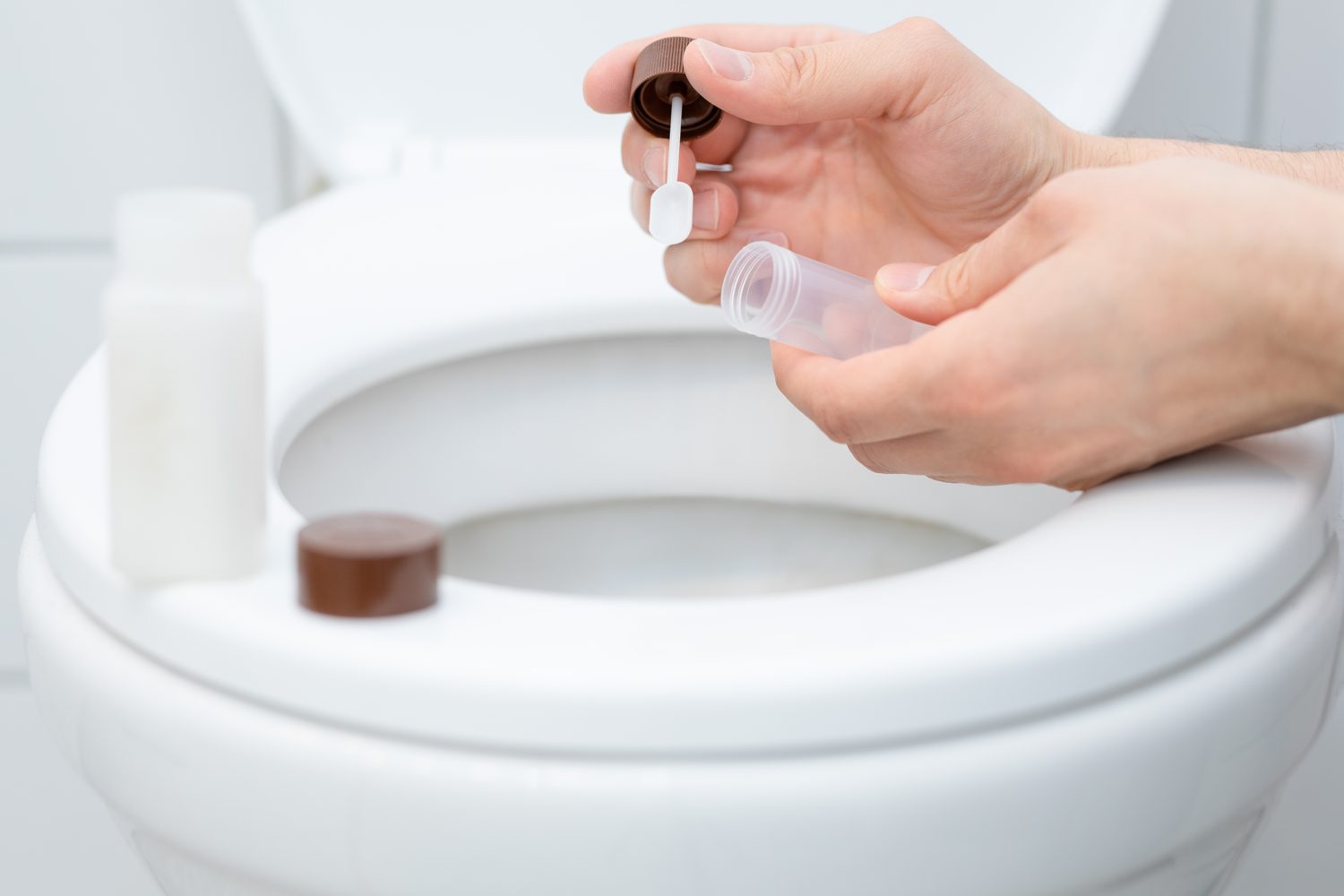
Collecting a stool sample at home takes about five minutes. Getting it to the laboratory in a state it can analyse takes a little planning. Here is what goes wrong.
1. Posting before a weekend
This is the big one. The sample is fine when it leaves you and degraded by the time it arrives, because it spent three days in a sorting office. Collect and post on the same day, Monday to Thursday only. Not Friday, not a weekend, not the day before a bank holiday, and over a counter rather than into a letterbox where it will sit until the next collection.
Until you post it, keep the sealed sample at room temperature between 10°C and 25°C. Not the fridge.
2. Overfilling the tube
More sample is not better sample. The tube contains a fixed volume of stabilising liquid, and the ratio matters to the assay. Roughly a pea-sized quantity in total is right. Take small amounts from three or four different places in the sample rather than one spot, so that what you send is representative.
Once the dosing stick goes back in, leave it there. Pulling it out and pushing it in again disturbs the measurement, and if the liquid changes colour the sample can no longer be used.
3. Diet interference
For three days before you collect, avoid raw or undercooked meat, high-dose vitamin C and iron-containing supplements. Raw meat carries animal haemoglobin that some assays can pick up. High-dose vitamin C and iron interfere with the chemistry. Ordinary food and a standard multivitamin are fine.
4. Contamination
The sample must not touch the toilet bowl, toilet water or cleaning products. That is what the paper collector in the kit is for: it sits on the seat and catches the sample clear of the water. Bleach, limescale remover and disinfectant residue can all wreck an assay. Wash your hands thoroughly before and after, and keep the tube away from anything you have cleaned with recently.
5. Testing at the wrong time
Blood from somewhere other than the bowel wall produces a result nobody can act on. Postpone the test if you are menstruating or expect to be within three days, if you have bleeding haemorrhoids or any anal bleeding, if you have bleeding gums or a gastritis flare, or if you have acute diarrhoea.
If you have bleeding that keeps coming back, that is worth a GP appointment in its own right rather than something to test around.
The boring administrative one
Fill in the request form legibly, in capitals, with your name, date of birth and the date of collection, and sign it. A sample that cannot be matched to a legible, signed form cannot be processed no matter how perfectly it was collected. Check the kit's expiry date before you start, too.
What happens if it does go wrong
You will be told, and you will need to repeat it. That costs you two or three weeks. Read the instruction leaflet before you start rather than during, pick a week when you can post Monday to Thursday, and none of this will apply to you.